The Ultimate Guide to Monster Truck Racing: History, Events, and Legends
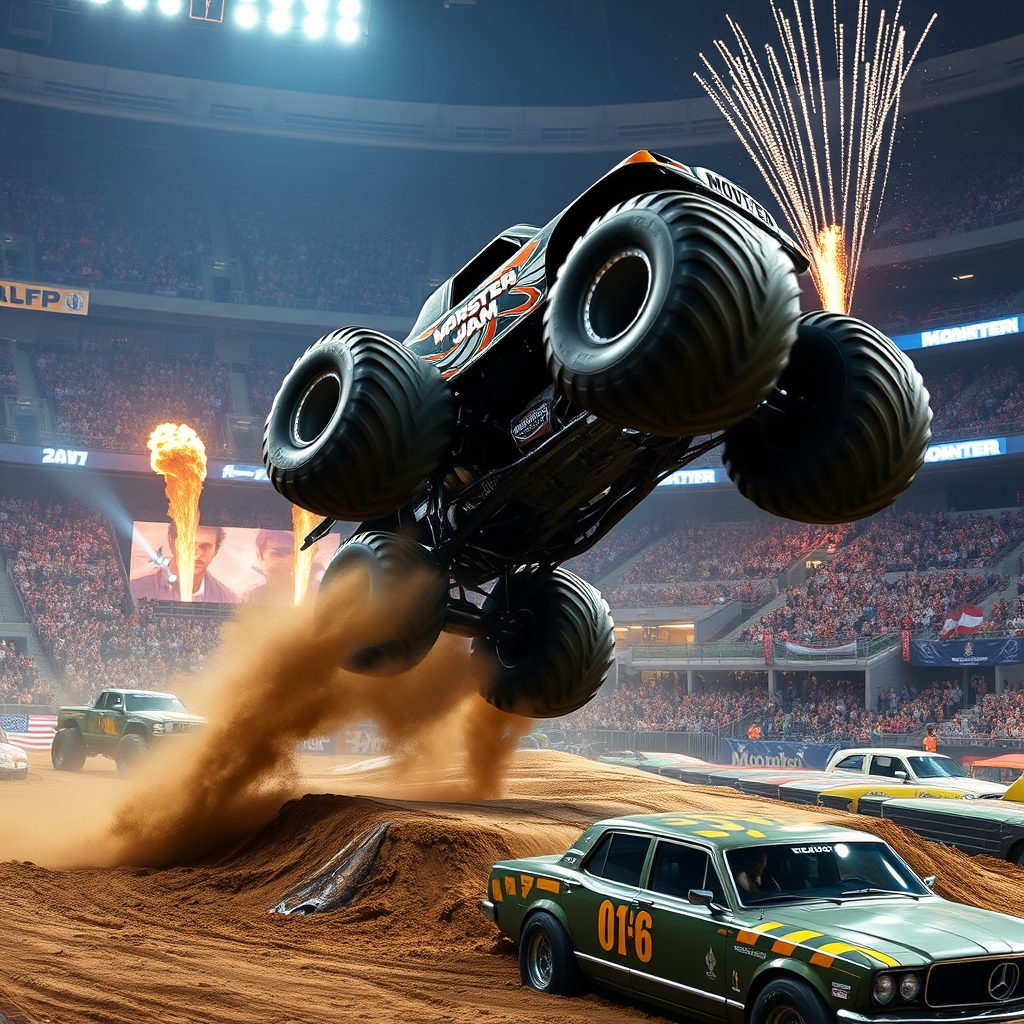
Monster truck racing is more than just a spectacle of roaring engines and gravity-defying stunts—it’s a cultural phenomenon that has captivated audiences for decades. What began as a humble offshoot of off-road truck modifications has evolved into a global entertainment powerhouse, blending athleticism, engineering prowess, and sheer adrenaline. Whether you’re a lifelong fan or a curious newcomer, this guide dives deep into the history, events, and legends that have shaped the sport into what it is today.
The Birth of a Beast: The Origins of Monster Truck Racing
The story of monster truck racing traces back to the late 1970s, when enthusiasts in the United States began modifying pickup trucks to tackle rugged terrains. The goal wasn’t just to create a vehicle that could handle mud and rocks—it was to build something that could crush obstacles under its massive tires. The first true monster truck, Bigfoot, emerged in 1979, created by Bob Chandler in St. Louis, Missouri. Originally designed for off-road exhibitions, Bigfoot quickly gained fame for its ability to drive over cars, a stunt that would become synonymous with the sport.
By the early 1980s, monster trucks had transitioned from off-road showcases to competitive racing. The first organized monster truck event, the Truck-A-Rama, took place in 1982, setting the stage for the sport’s rapid growth. These early competitions were raw and unpolished, often held in fairgrounds or makeshift arenas, but they laid the foundation for the high-octane entertainment we know today.
The Rise of Monster Jam: A Global Phenomenon
No discussion of monster truck racing would be complete without mentioning Monster Jam, the sport’s most iconic and widely recognized event series. Founded in 1992 by the United States Hot Rod Association (USHRA), Monster Jam transformed monster truck competitions into a mainstream spectacle. With its blend of racing, freestyle stunts, and pyrotechnics, Monster Jam turned drivers into celebrities and trucks into legends.
Monster Jam events are a sensory overload in the best possible way. The thunderous roar of engines, the sight of trucks soaring through the air, and the smell of burning rubber create an atmosphere unlike any other. The series has expanded globally, with events held in stadiums across North America, Europe, and beyond. Each show features a mix of racing and freestyle competitions, where drivers are judged on creativity, difficulty, and style as they perform jaw-dropping stunts like backflips, wheelies, and donuts.
One of the most exciting aspects of Monster Jam is its accessibility. Unlike traditional motorsports, which can feel exclusive or intimidating to newcomers, Monster Jam is designed to be family-friendly. The energy is infectious, and the sheer variety of trucks—each with its own unique design and personality—ensures there’s something for everyone to enjoy.
Iconic Trucks That Defined the Sport
Over the years, certain monster trucks have become household names, their legacies etched into the history of the sport. Grave Digger, perhaps the most famous of them all, debuted in 1982 and quickly became a fan favorite thanks to its distinctive green flames and eerie graveyard-themed design. Driven by legends like Dennis Anderson, Grave Digger is synonymous with Monster Jam and has won countless championships, cementing its status as a cultural icon.
Another titan of the sport is Bigfoot, the truck that started it all. While it may not dominate the competition circuit like it once did, Bigfoot remains a symbol of the sport’s roots. Its massive 10-foot-tall tires and rugged design are a testament to the ingenuity of the early monster truck pioneers. Other notable trucks include Max-D, known for its aggressive styling and high-flying stunts, and El Toro Loco, a fan favorite with its fiery bull-themed design.
Key Figures Who Shaped the Sport
Behind every legendary truck is a driver whose skill and charisma have helped shape the sport. Dennis Anderson, the man behind Grave Digger, is often credited with elevating monster truck racing to new heights. His fearless driving style and showmanship turned Grave Digger into a global brand, inspiring generations of drivers to push the limits of what’s possible.
Another influential figure is Tom Meents, a multiple-time Monster Jam World Finals champion and the driver of Max-D. Meents is known for his technical precision and innovative stunts, often incorporating elements like backflips and corkscrews into his routines. His rivalry with other top drivers has added drama and excitement to the sport, making Monster Jam events must-see spectacles.
Beyond the drivers, the sport owes much of its success to the engineers and mechanics who design and maintain these mechanical beasts. The evolution of monster trucks—from simple modified pickups to the high-tech machines of today—is a testament to their ingenuity. Modern trucks feature advanced suspension systems, lightweight materials, and powerful engines, allowing them to perform stunts that would have been unthinkable in the sport’s early days.
The Evolution of Monster Truck Racing
Monster truck racing has come a long way since its humble beginnings. What started as a niche off-road hobby has grown into a multi-million-dollar industry, complete with corporate sponsorships, television deals, and a dedicated fanbase. The sport has also become more professionalized, with drivers undergoing rigorous training and trucks being built to exacting standards. Safety has improved dramatically, with advancements like reinforced roll cages, remote-controlled shut-off switches, and stricter event regulations ensuring that drivers can push the limits without unnecessary risk.
Technology has played a significant role in the sport’s evolution. Today’s monster trucks are equipped with cutting-edge features like telemetry systems, which allow teams to monitor performance in real-time, and advanced aerodynamics, which help trucks achieve greater airtime during stunts. The introduction of electric monster trucks, such as Monster Jam’s El Toro Loco Electric, signals a new era of innovation, combining the thrill of monster truck racing with sustainable technology.
Despite these advancements, the spirit of monster truck racing remains unchanged. At its core, the sport is about spectacle, excitement, and the sheer joy of watching massive machines defy gravity. Whether it’s the roar of the crowd as a truck launches into the air or the collective gasp as a driver lands a perfect backflip, monster truck racing continues to captivate audiences with its blend of raw power and creativity.
The world of monster truck racing is a testament to the enduring appeal of motorsports. From its grassroots beginnings to its current status as a global phenomenon, the sport has evolved in ways few could have imagined. Yet, at its heart, it remains a celebration of ingenuity, courage, and the relentless pursuit of the next big thrill. As new legends emerge and technology continues to push the boundaries of what’s possible, one thing is certain: the roar of monster trucks will echo through stadiums for generations to come, inspiring awe and excitement in all who witness it.