The Wild World of Monster Trucks: Engineering Giants of the Off-Road Scene
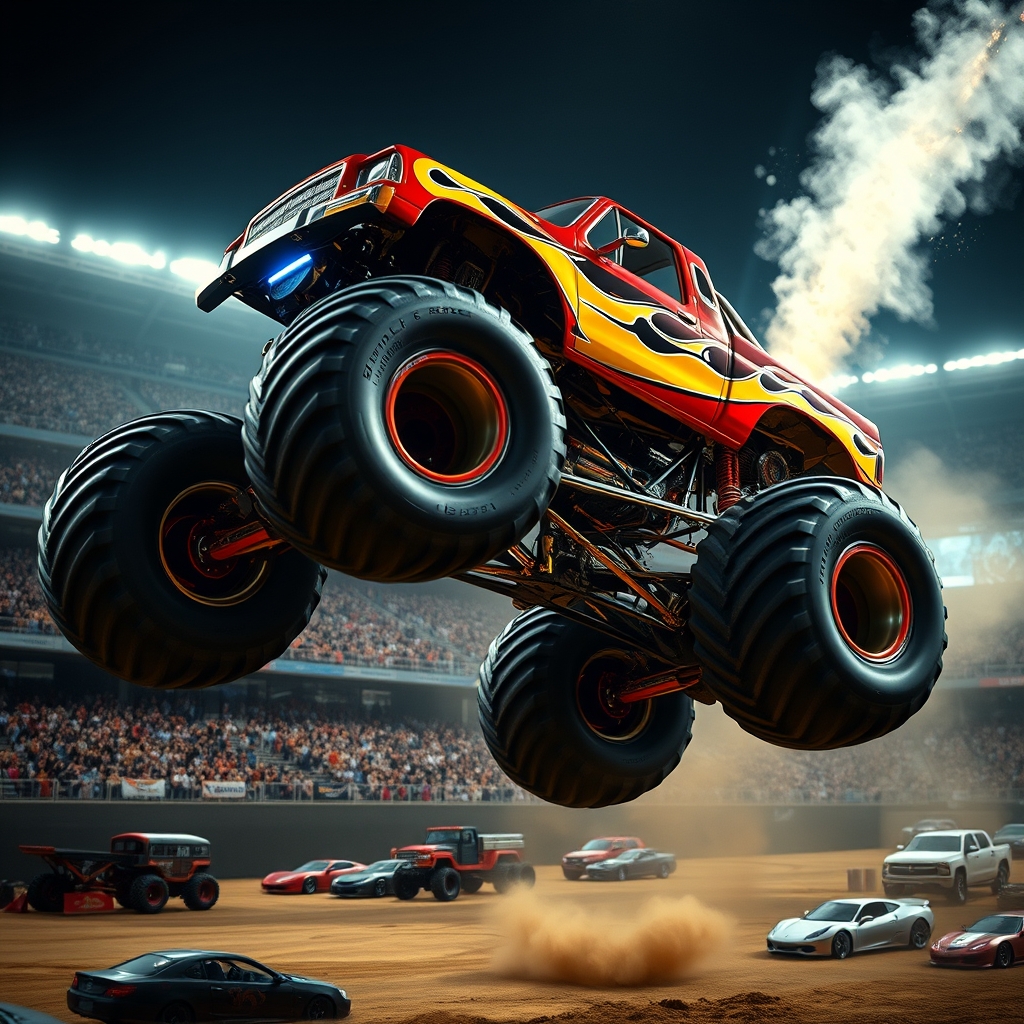
Monster trucks are more than just oversized vehicles with massive tires—they are the result of extreme engineering, relentless creativity, and a passion for pushing the limits of automotive performance. These behemoths dominate arenas with their thunderous roars, gravity-defying jumps, and sheer power, captivating audiences worldwide. But what truly goes into building these mechanical monsters, and how do they evolve from ordinary trucks into off-road legends?
The Birth of a Monster: Custom Builds and Chassis Reinvention
At the heart of every monster truck is a custom-built chassis designed to withstand the brutal forces of high-flying stunts and crushing landings. Unlike factory trucks, these frames are meticulously engineered from scratch, often using high-strength steel or chromoly tubing to ensure durability. Builders prioritize weight distribution, suspension travel, and structural integrity, as a single weak point can lead to catastrophic failure during a performance.
The process begins with stripping down a donor vehicle, if one is used at all. Many modern monster trucks are purpose-built from the ground up, allowing for complete control over every component. The chassis is then reinforced with roll cages, skid plates, and custom mounts for the engine, transmission, and suspension. This level of customization ensures that each truck is uniquely suited to its intended purpose, whether it’s racing, freestyle, or crushing cars in an arena.
Power Under the Hood: Monster Engine Swaps and Turbo Builds
The engine is the soul of a monster truck, and builders spare no expense when it comes to extracting every ounce of power. Most monster trucks are equipped with high-performance V8 engines, often sourced from drag racing or marine applications. These powerplants are heavily modified with forged internals, high-flow fuel systems, and custom camshafts to handle the extreme stress of monster truck operations.
One of the most popular engine swaps involves dropping a massive big-block V8—sometimes displacing over 500 cubic inches—into the chassis. These engines are frequently paired with forced induction, such as superchargers or turbochargers, to produce horsepower figures that can exceed 1,500 HP. The result is a machine that can accelerate from 0 to 60 mph in under 4 seconds, despite weighing several tons. For those seeking even more power, some builders experiment with methanol or nitrous oxide injection, pushing the limits of what these engines can endure.
The Role of Monster Exhaust Systems
With great power comes great noise—and monster trucks are anything but quiet. A custom exhaust system is essential not only for performance but also for creating that signature thunderous growl that fans love. These systems are designed to maximize airflow while minimizing backpressure, often featuring straight-pipe designs with massive headers and high-flow mufflers. Some builders even incorporate flame-throwing exhaust tips, adding a dramatic visual element to the auditory spectacle.
Tires That Defy Gravity: The Science of Monster Truck Rubber
No discussion of monster trucks would be complete without mentioning their most iconic feature: the tires. These aren’t your average off-road tires—they are massive, 66-inch-tall behemoths designed to absorb the impact of 30-foot jumps and still provide enough traction to power through mud, sand, or crushed cars. The tires are typically custom-made by specialty manufacturers, using reinforced sidewalls and deep treads to prevent punctures and maintain grip.
The weight of these tires alone can exceed 800 pounds each, which is why monster trucks require such robust suspension systems. The tires are often filled with foam instead of air to prevent flats, and their sheer size contributes to the truck’s ability to roll over obstacles without tipping. Without these specialized tires, monster trucks simply wouldn’t be able to perform the stunts that make them legendary.
Legends of the Arena: Iconic Monster Trucks and Their Builds
Some monster trucks have achieved near-mythical status in the world of off-road racing. Bigfoot, the original monster truck, was born in 1979 when Bob Chandler modified a Ford F-250 with larger tires to navigate rough terrain. Today, Bigfoot is a symbol of the sport’s roots, with multiple versions still performing in shows around the world.
Another legend, Grave Digger, is instantly recognizable by its signature black and green paint scheme and glowing skulls. Originally built by Dennis Anderson in the early 1980s, Grave Digger has become one of the most successful and enduring monster trucks in history. Its custom chassis and powerful engine have allowed it to dominate competitions for decades, inspiring countless imitators and cementing its place in monster truck lore.
Then there’s El Toro Loco, a fan favorite known for its wild, bull-themed design and aggressive performance. This truck exemplifies the trend of themed monster trucks, where builders go beyond mechanical modifications to create a full sensory experience for audiences. The attention to detail in these builds—from custom paint jobs to hydraulic systems that make the truck “snort” smoke—shows how far the sport has evolved from its humble beginnings.
Frankenstein Builds: When Cars Become Monsters
Not all monster trucks start as trucks. Some of the most creative builds begin with unexpected donor vehicles, earning them the nickname “Frankenstein cars.” Builders have transformed everything from classic muscle cars to school buses into full-fledged monster trucks, often retaining elements of the original vehicle’s identity while adding monster truck capabilities. These hybrid builds are a testament to the ingenuity of the monster truck community, proving that with enough skill and imagination, any vehicle can be reborn as a beast of the arena.
The Future of Monster Trucks: Innovation and Extreme Performance
As technology advances, so too does the world of monster trucks. Electric monster trucks are beginning to make appearances, offering instant torque and reduced emissions without sacrificing power. Some builders are experimenting with hybrid systems, combining traditional internal combustion engines with electric motors to create the next generation of high-performance monsters. Meanwhile, advancements in materials science are leading to lighter, stronger chassis and components, allowing for even more extreme stunts and faster lap times.
The sport is also embracing digital innovation, with virtual reality experiences and augmented reality enhancements bringing fans closer to the action than ever before. Social media has given builders a platform to showcase their work, inspiring a new generation of enthusiasts to dive into the world of monster truck customization. Whether it’s through cutting-edge engineering or sheer creative brilliance, the future of monster trucks promises to be as thrilling as their past.
From the roar of the engines to the sight of a truck soaring through the air, monster trucks embody the spirit of automotive adventure. They are a celebration of power, precision, and the relentless pursuit of the extraordinary. Every jump, every crush, and every victory is a reminder of what happens when passion meets engineering—and the result is nothing short of spectacular.