Grave Digger: The Iconic Monster Truck That Defined a Generation
Few names in the world of motorsports resonate as powerfully as Grave Digger. More than just a monster truck, it’s a cultural phenomenon—a rolling symbol of raw power, daring stunts, and the unbreakable spirit of competition. Since its debut in the early 1980s, Grave Digger has carved out a legacy that transcends its four massive wheels, becoming a household name and a defining force in monster truck history.
The Birth of a Legend
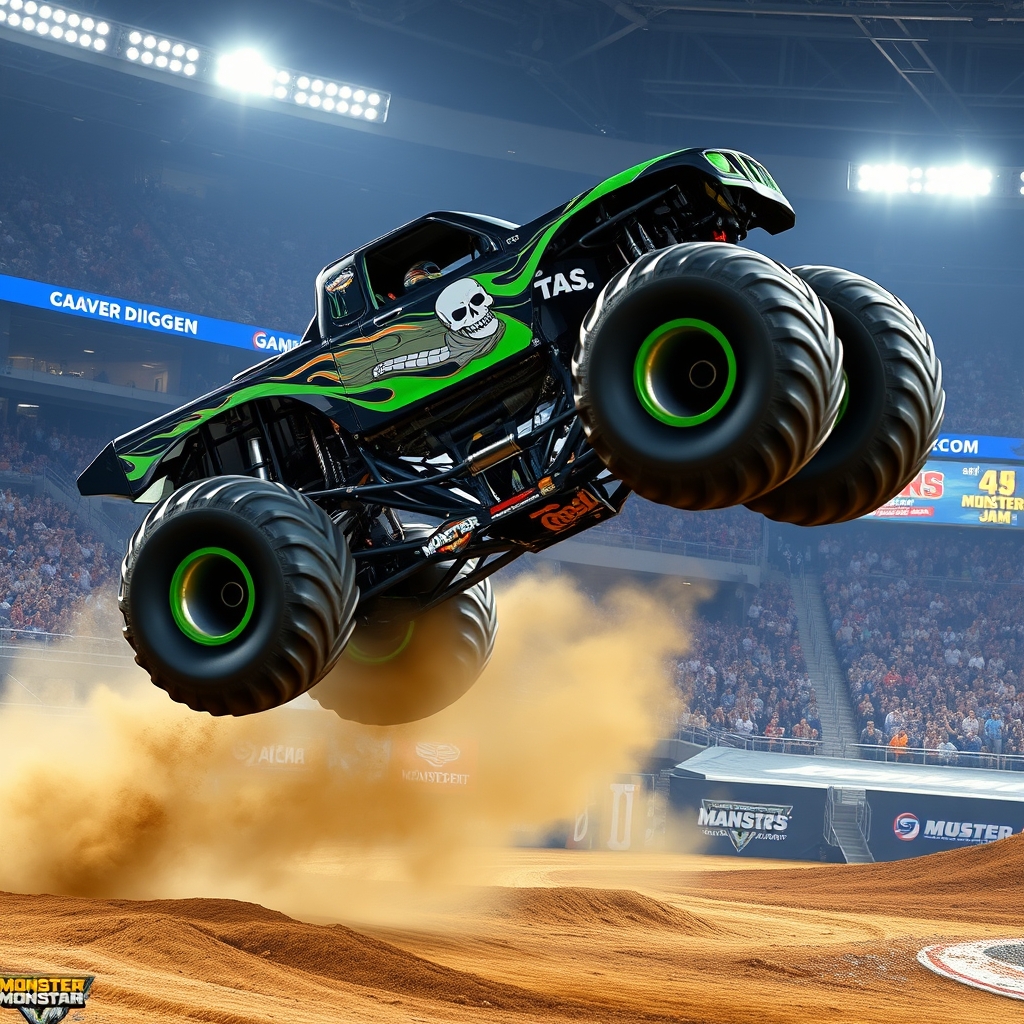
Grave Digger was born in 1982, the brainchild of Dennis Anderson, a North Carolina native with a passion for trucks and a knack for showmanship. What started as a side project—a modified 1952 Ford pickup with a homemade body—quickly evolved into something far greater. Anderson’s early versions of Grave Digger were rough, unpolished, and built with whatever parts he could scavenge, but they possessed an undeniable charisma. The truck’s signature green flames and skull motif weren’t just for show; they reflected Anderson’s rebellious, do-it-yourself ethos, a spirit that would come to define the monster truck scene.
By the mid-1980s, Grave Digger had transitioned from local events to the national stage, competing in the burgeoning monster truck circuit. Its aggressive styling and Anderson’s fearless driving style set it apart from the competition. The truck wasn’t just fast or powerful—it was a spectacle, a rolling work of art that captivated audiences wherever it went. The name “Grave Digger” itself became synonymous with excitement, danger, and the thrill of the unknown.
The Drivers Who Made History
While Dennis Anderson is the face most associated with Grave Digger, the truck’s success is also a testament to the skill and dedication of its drivers. Anderson himself piloted the truck for decades, becoming one of the most recognizable figures in monster truck history. His rivalry with other legendary drivers, such as Bigfoot’s Bob Chandler, pushed the boundaries of what was possible in the sport, turning competitions into must-see events.
Over the years, other drivers have taken the wheel of Grave Digger, each bringing their own flair to the truck’s legacy. Names like Pablo Huffaker, Charlie Pauken, and Adam Anderson (Dennis’s son) have all contributed to Grave Digger’s dominance in the arena. These drivers didn’t just steer the truck—they embodied its spirit, turning every race, freestyle event, or car crush into a performance that left audiences on the edge of their seats. Their ability to push the limits of physics, launching Grave Digger into the air with seemingly impossible control, became a hallmark of the brand.
The Evolution of a Monster
Grave Digger’s design has undergone countless transformations since its humble beginnings. The early versions were crude but effective, built for durability and performance. As the sport evolved, so did the truck. The 1990s saw Grave Digger adopt a more refined look, with sleeker bodywork, improved suspension systems, and engines capable of producing over 1,500 horsepower. The iconic green flames and skulls remained, but the truck’s overall aesthetic became more polished, reflecting its status as a professional racing machine.
One of the most significant modifications came in the form of Grave Digger’s signature “flying” body. Unlike traditional monster trucks, which had fixed bodies, Grave Digger’s body was designed to detach mid-air during stunts, creating the illusion that the truck was soaring through the air without constraints. This innovation not only wowed crowds but also set a new standard for what monster trucks could achieve in terms of showmanship and spectacle.
The Impact on Monster Truck Culture
Grave Digger’s influence on monster truck culture cannot be overstated. It wasn’t just a competitor; it was a trendsetter, inspiring countless imitators and shaping the direction of the sport. Before Grave Digger, monster trucks were primarily seen as novelty vehicles, a sideshow to more mainstream motorsports. Anderson and his team changed that perception, turning monster truck racing into a legitimate, high-octane sport with a global following.
The truck’s success also paved the way for the monster truck industry as we know it today. Grave Digger’s popularity helped establish major events like Monster Jam, which has become the premier platform for monster truck competitions worldwide. The truck’s merchandise, from die-cast models to video games, has further cemented its place in pop culture, introducing new generations to the thrill of monster trucks.
The Legacy Continues
Today, Grave Digger is more than just a truck—it’s an institution. With over 40 years of history, it has outlasted countless competitors and remains a dominant force in the sport. The truck’s current iterations are technological marvels, equipped with state-of-the-art suspension systems, high-performance engines, and safety features that allow drivers to push the limits without compromising their well-being. Yet, despite these advancements, Grave Digger has never lost sight of its roots. The green flames, the skulls, and the rebellious spirit that defined its early years are still very much a part of its identity.
For fans, Grave Digger represents more than just a machine. It’s a symbol of perseverance, innovation, and the relentless pursuit of greatness. Whether it’s crushing cars, soaring through the air, or simply revving its engine, Grave Digger continues to captivate audiences, proving that some legends never fade. The truck’s story is far from over, and as long as there are fans cheering in the stands, Grave Digger will keep digging its way into the hearts of motorsport enthusiasts around the world.